
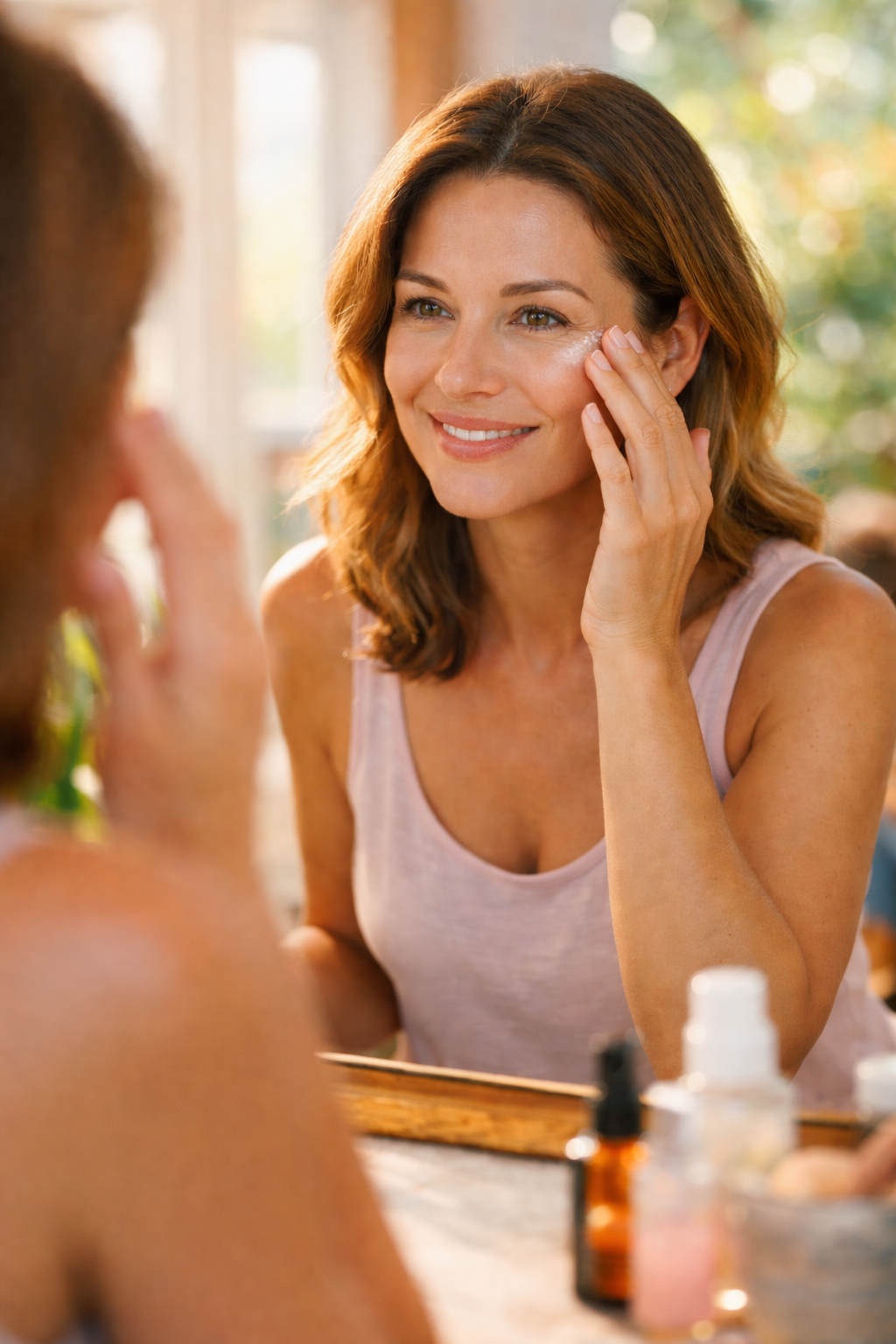
Anti-ageing skincare works best when it combines daily SPF, proven ingredients such as vitamin C and retinol alternatives, and consistent hydration. Vegan collagen-support supplements may also help improve the appearance of fine lines and wrinkles over time.
Skin ageing is influenced by genetics, sun exposure, lifestyle and the gradual decline of collagen and elastin. No cream can stop the ageing process, but the right anti-ageing skincare can improve texture, support firmness and soften the look of wrinkles.
The key is to understand what actually works and where products fit into a realistic routine.
This post contains affiliate links. If you click through and buy something, I may earn a small commission at no extra cost to you.
What Causes Fine Lines and Wrinkles?
Fine lines and wrinkles develop for two main reasons: intrinsic ageing and external damage.
Intrinsic ageing reflects natural collagen decline. From your mid-20s onwards, collagen production slows. Skin becomes thinner and less elastic.
Extrinsic ageing is driven largely by UV exposure, pollution and lifestyle factors such as smoking and poor sleep. UV radiation breaks down collagen and accelerates visible wrinkles.
Hydration levels and barrier health also play a role. When the skin barrier is compromised, dehydration lines become more noticeable.
The Role of Collagen, UV Exposure and Skin Barrier Health
Collagen gives skin structure. Elastin allows it to bounce back. When collagen decreases, skin loses firmness and lines deepen.
Daily broad-spectrum SPF remains the most effective anti-ageing step. Without sun protection, active ingredients cannot compensate for ongoing collagen breakdown.
Supporting the skin barrier with gentle cleansing, humectants such as hyaluronic acid and nourishing plant oils helps reduce the appearance of fine lines linked to dehydration.
What Works in Anti-Ageing Skincare?
The most effective anti-ageing skincare combines protection, stimulation and hydration.
Look for ingredients with consistent evidence behind them:
• Vitamin C to support collagen production and brighten skin
• Retinoids or plant alternatives such as bakuchiol
• Peptides that support skin structure
• Hyaluronic acid to improve hydration
• Antioxidants to defend against environmental stress
A well-formulated anti wrinkle cream or eye cream for wrinkles should contain at least one of these categories.
Nourish London offers several formulations that include peptides, hyaluronic acid and antioxidant-rich plant oils within vegan, cruelty-free products.
Shop Nourish London’s Argan Anti-Ageing Moisturiser
Their Kale Anti-Ageing Eye Cream includes ingredients targeted at delicate under-eye skin and is positioned for fine lines and dryness.
Shop Nourish London’s Kale Anti-Ageing Eye Cream
When using retinol, introduce it gradually and use SPF daily. If your skin is sensitive, bakuchiol may offer similar visible benefits with lower irritation risk.
Choosing an Anti Wrinkle Cream and Eye Cream for Wrinkles
For your main moisturiser, prioritise:
• A stable vitamin C derivative or antioxidant blend
• Peptides or retinol alternatives
• Barrier-supporting oils
For the eye area:
• Lightweight texture
• Hyaluronic acid
• Peptides
• Minimal fragrance
Consistency matters more than strength. Using a moderate formula regularly produces better long-term results than switching between products.
Do Vegan Collagen Supplements Help With Skin Ageing?
Vegan collagen supplements do not contain collagen itself. Instead, they provide nutrients that support your body’s natural collagen production.
These typically include:
• Vitamin C
• Zinc
• Silica
• Amino acids
• Hyaluronic acid
Clinical research on oral collagen peptides has shown improvements in skin hydration and elasticity in some studies. A 2023 systematic review published in the International Journal of Dermatology concluded that collagen supplementation was associated with improvements in skin hydration and elasticity across multiple trials.
Vegan collagen builders work differently. They support the biological processes involved in collagen synthesis rather than supplying collagen directly. Results depend on consistency, overall nutrition and skin care habits.
Raw Beauty Lab Vegan Collagen is formulated around amino acids, hyaluronic acid and supporting micronutrients designed to aid natural collagen formation.
Explore Raw Beauty Lab Vegan Collagen
Collagen support can be useful, but it should be viewed as one part of a broader anti-ageing strategy.
Can Supplements Support Skin Ageing Beyond Collagen?
Collagen production is only one aspect of skin ageing. Barrier integrity, inflammation balance and antioxidant status also influence how skin looks and feels over time.
Some formulas combine nutrients associated with skin structure and repair. DR.VEGAN Skin Saviour, for example, includes vitamin C, zinc and hyaluronic acid within a broader skin-focused formulation.
Together Health Beautiful takes a similar multi-nutrient approach, combining vitamin C, biotin, zinc, silica and hyaluronic acid in a daily two-capsule serving.
Shop Together Health Beautiful
Omega-3 fatty acids do not increase collagen directly, but they contribute to skin barrier strength and help regulate inflammation. Algae-derived omega-3 provides DHA and EPA without fish-based ingredients.
Nothing Fishy Vegan Omega-3 provides 200mg DHA per softgel and is designed to be taken with food.
Shop Nothing Fishy Vegan Omega-3
Together Health also offers an algae omega-3 formula with clearly listed DHA and EPA content.
Explore Together Health Algae Omega-3
Supplements can support skin health internally, but they work best alongside consistent topical skincare and daily SPF.
How to Combine Topicals and Supplements
Topicals act directly on the skin’s surface. Supplements influence internal processes that contribute to structure and barrier function.
A simple structure:
Morning
• Gentle cleanse
• Vitamin C serum
• Moisturiser
• SPF
Evening
• Cleanse
• Retinol or bakuchiol
• Nourishing moisturiser
Skin renewal and collagen production are gradual processes. If you use supplements, take them as directed and allow several weeks before expecting visible changes.. They complement skincare but do not replace proven topical ingredients or sun protection.
Building a Simple Anti-Ageing Skincare Routine That Lasts
The most effective anti-ageing skincare routine is one you can maintain.
Focus on:
• Daily SPF
• One targeted active ingredient
• Consistent hydration
• Barrier support
Avoid layering multiple strong actives at once. Introduce new products gradually and monitor how your skin responds.
Visible improvements in hydration and texture can appear within weeks. Structural changes linked to collagen take longer and require consistent long-term habits.
Skincare works best when expectations are realistic and routines are sustainable.
Frequently Asked Questions
What is the best anti-ageing skincare?
The best anti-ageing skincare includes daily SPF, a vitamin C product, a retinol or bakuchiol-based treatment and a moisturiser that supports the skin barrier. No single product reverses ageing, but a consistent routine with proven ingredients improves the appearance of fine lines and wrinkles.
Is 40 too late to start using retinol?
No. Retinol can benefit skin at any adult age. If starting in your 40s, introduce it gradually, use a lower strength and apply SPF daily. Sensitive skin types may prefer bakuchiol as an alternative.
What is the best anti-ageing skincare routine for your 30s and 40s?
In your 30s, focus on prevention: SPF, vitamin C and gentle retinol use. In your 40s, maintain those steps and prioritise barrier repair, hydration and consistency. The routine structure remains similar, but recovery support becomes more important.
How can I look younger naturally without invasive treatments?
Protecting skin from sun exposure, maintaining hydration, using evidence-based actives and supporting overall health through sleep and nutrition all influence how skin ages. Improvements come from cumulative habits rather than one product.
Do vegan collagen supplements actually help with wrinkles?
Vegan collagen supplements support the nutrients involved in collagen production rather than supplying collagen directly. Some people notice improvements in skin hydration and texture over time, but they work best alongside topical skincare and realistic expectations.