
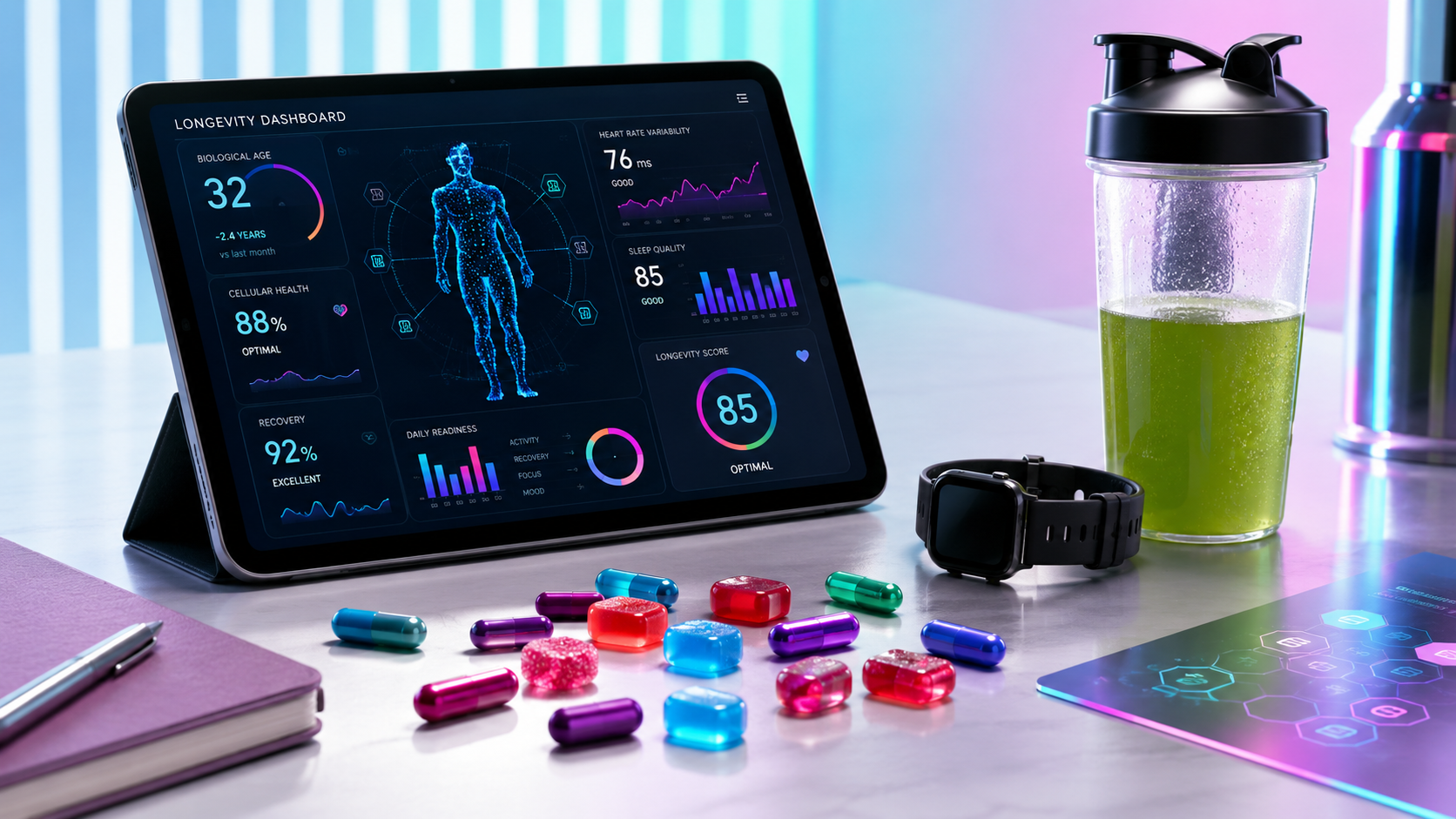
Longevity supplements support healthy ageing pathways such as NAD+ metabolism, antioxidant defence, autophagy and metabolic health. For vegans, key checks include ingredient source, capsule material, added extras, certification and animal-testing standards.
Some links on this page are affiliate links. This means Vegan Verity may earn a small commission if you buy through them, at no extra cost to you.
Longevity supplements have become popular because they promise support for ageing well. The problem is that the word “longevity” can mean many things.
Some products focus on NAD+ support. Others use plant compounds, antioxidants, amino acids or ingredients linked to autophagy and metabolic health. Some have credible early research behind them. Others lean heavily on anti-ageing marketing.
For vegans, there is another layer. A supplement may contain a plant-derived or synthetic active ingredient, yet still use a gelatine capsule, animal-derived added ingredient, collagen blend or unclear animal-testing policy.
This guide explains the main types of longevity supplements, what they are used for, and how to assess them through a vegan lens.
What Makes a Longevity Supplement Vegan?
A vegan longevity supplement starts with animal-free ingredients, but that is not the whole picture. You also need to consider the capsule shell, added ingredients, manufacturing aids, testing standards and certification.
Certification can give extra reassurance, as the Vegan Society’s Vegan Trademark standards cover animal-derived ingredients, by-products and animal testing by the company or on its behalf.
Ingredients, Capsules, Added Extras and Animal Testing
A supplement may contain an active ingredient that sounds vegan, yet still use non-vegan supporting materials.
Check for:
Capsules: vegan capsules usually use HPMC or pullulan. Gelatine is animal-derived.
Added extras: coatings, colours, glycerine, shellac, beeswax, lactose or magnesium stearate sources may need checking.
Blended formulas: some healthy ageing products include collagen, marine collagen, fish oil, dairy cultures or animal-derived joint ingredients.
Certification: vegan-suitable and vegan-certified do not always mean the same thing.
Testing: some readers want a clear cruelty-free or animal-testing policy, especially for finished products.
There is also a difference between an ingredient having a research history that includes animal studies and a brand testing its finished supplement on animals. Many longevity ingredients have been studied in animals by independent researchers. That does not automatically tell you how a finished product was developed, manufactured or tested.
NAD+ Support Supplements
NAD+ is a molecule involved in cellular energy production and repair processes. Interest in NAD+ has grown because levels appear to change with age, and researchers are studying whether NAD+ precursors can support healthy ageing markers.
This is one of the most important areas in the longevity supplement market, but it also attracts overconfident claims. The evidence is developing. It does not prove that NAD+ supplements make people live longer.
Human research into NAD+ boosting compounds has focused heavily on nicotinamide riboside, NR, and nicotinamide mononucleotide, NMN, but long-term healthspan and lifespan claims need caution.
NMN, NR and NAD+ Formulas
NMN supplements contain nicotinamide mononucleotide, a precursor used by the body in NAD+ production. NMN is one of the central ingredients in the longevity space because it connects directly to NAD+ research.
NR supplements contain nicotinamide riboside, another NAD+ precursor. NR has also been studied in human trials and often appears alongside NMN in discussions of healthy ageing.
NAD+ formulas usually combine several ingredients that support NAD+ pathways. They may include precursors, methylation support, antioxidants or plant compounds. Read the formula carefully because “NAD+ support” can mean different things from one product to another.
Plant Compounds Used in Longevity Supplements
Polyphenols are plant compounds found in foods such as berries, grapes, tea, cocoa, herbs and colourful plants. In supplement form, they are often used for antioxidant, inflammatory and cellular signalling support.
This category includes some of the best-known longevity supplement ingredients, but the claims need care. A compound can look promising in cells or animals and still have limited proof in humans.
Resveratrol, Quercetin and Fisetin
Resveratrol is a polyphenol found in grape skins, berries and peanuts. It is widely discussed in healthy ageing research because of its links to oxidative stress, inflammation and cellular signalling. Human clinical research on resveratrol exists across several health contexts, though results vary by dose, population and outcome.
Quercetin is a flavonoid found in onions, apples, capers and tea. It often appears in longevity blends because of its antioxidant and inflammatory pathway research. Some formulas pair quercetin with other compounds, but the practical evidence depends on the exact formula and dose.
Fisetin is another plant flavonoid found in foods such as strawberries and apples. It receives attention because of senolytic research, which looks at compounds that may affect senescent cells. Human evidence remains limited, so it should be treated as an emerging ingredient.
Spermidine and Cellular Clean-Up Support
Autophagy is the body’s cellular recycling process. It helps cells break down and reuse damaged components. This area matters in longevity research because cellular maintenance plays a role in healthy ageing.
Supplements in this category should be discussed carefully. Autophagy is a real biological process, but a supplement label cannot prove meaningful cellular renewal in a person without proper evidence.
What Spermidine Supplements Are Used For
Spermidine is a naturally occurring polyamine found in foods such as wheat germ, soya beans, mushrooms and some legumes. It is linked to autophagy research and has become a common longevity supplement ingredient.
Reviews of research on spermidine and ageing biology often discuss autophagy, but this does not make spermidine a guaranteed anti-ageing solution.
Berberine, GlyNAC and Antioxidant Support
Healthy ageing is closely linked with metabolic health, oxidative stress, inflammation, mitochondrial function and blood sugar regulation. Some longevity supplements sit in this broader support category.
This does not mean they are direct lifespan supplements. It means they may support systems that matter as people age.
Metabolic Health, Glutathione and NAC
Berberine is a plant alkaloid often discussed for metabolic health. Research has examined berberine for outcomes such as blood lipids, insulin resistance and metabolic markers. It can interact with medication, especially diabetes medication, so it needs more caution than a simple daily supplement.
GlyNAC combines glycine and N-acetylcysteine. The body uses these to help produce glutathione, a major antioxidant. Human research has looked at GlyNAC in relation to glutathione, oxidative stress and ageing-related markers.
NAC stands for N-acetylcysteine. It is a precursor to glutathione and often appears in antioxidant support supplements. It may not suit everyone, especially people on certain medications, so suitability matters.
Magnesium sometimes appears in healthy ageing formulas because it supports normal muscle function, nerve function and energy metabolism. It is useful, but it is not a specialist longevity ingredient in the same way as NMN, NR, spermidine or GlyNAC, so it does not need to be the centre of this guide.
L’CELL has confirmed that its supplements are vegan except the collagen product, which is not vegan.
How to Choose Vegan Longevity Supplements
A good longevity supplement should be easy to understand. You should know what the active ingredient is, how much it contains, why it is included and whether it suits your diet and health situation.
Avoid products that rely on vague claims such as “anti-ageing miracle”, “cellular reversal” or “live longer”. Longevity science is complex, and supplement evidence varies by ingredient.
Evidence, Dosage, Interactions and Suitability
Use this checklist before buying:
Check the active ingredient. NMN, NR, resveratrol, spermidine, berberine, GlyNAC and NAC all belong to different categories. They do not do the same thing.
Check the dose. A label should state the amount per serving. Proprietary blends can hide useful detail.
Check vegan suitability. Look at the capsule, active ingredient source, added ingredients and certification.
Check testing standards. Third-party testing, batch testing or clear quality statements can add reassurance.
Check medication interactions. Berberine, NAC, magnesium and some plant compounds may interact with medication or health conditions.
Check whether the claim matches the evidence. “Supports NAD+ metabolism” is more credible than “reverses ageing”. “Supports antioxidant defence” is more credible than “detoxes your cells”.
For many vegans, the best approach is simple: choose the category that matches your goal, then check the source, dose, vegan status, evidence and suitability.
Where to Start With Vegan Longevity Supplements
Longevity supplements can be useful when they support a clear goal, use vegan-suitable ingredients and avoid exaggerated promises.
Start with the category that matches what you are looking for: NAD+ support, plant compounds, autophagy support, or metabolic and antioxidant support.
L’CELL has confirmed that its supplements are vegan except the collagen product, which is not vegan.
FAQs
What is the best supplement for longevity?
There is no single best supplement for longevity. The most relevant option depends on your goal. NMN, NR and NAD+ formulas are usually chosen for NAD+ support. Resveratrol, quercetin and fisetin are plant compounds. Spermidine is linked to autophagy research. Berberine, GlyNAC and NAC sit more in the metabolic and antioxidant support category.
What are five supplements for longevity?
Five common longevity supplements are NMN, NR, resveratrol, spermidine and GlyNAC. NMN and NR are used for NAD+ support. Resveratrol is a plant polyphenol. Spermidine is linked to autophagy research. GlyNAC supports glutathione production. These are not guaranteed life-extension supplements, so treat them as healthy ageing support options.
Do longevity supplements really work?
Some longevity supplements have human research behind them, but evidence varies. NMN and NR are used for NAD+ support, and ingredients such as resveratrol, spermidine, berberine and GlyNAC have been studied for ageing-related markers. That does not prove they extend lifespan in humans. Treat them as targeted support, not a replacement for diet, sleep, movement and medical advice where needed.
Are longevity supplements vegan?
Some longevity supplements are vegan, but not all. A product may contain a vegan active ingredient yet use gelatine capsules, animal-derived added ingredients, collagen, marine ingredients or unclear testing policies. Vegan-certified products usually offer stronger reassurance than products that only say “suitable for vegans”.
What should vegans check before buying longevity supplements?
Vegans should check the active ingredient source, capsule shell, added ingredients, certification and animal-testing policy. They should also check the dose, evidence, medication interactions and whether the product’s claims are realistic. A vegan longevity supplement should make its ingredients and purpose clear.
Leave a Reply