
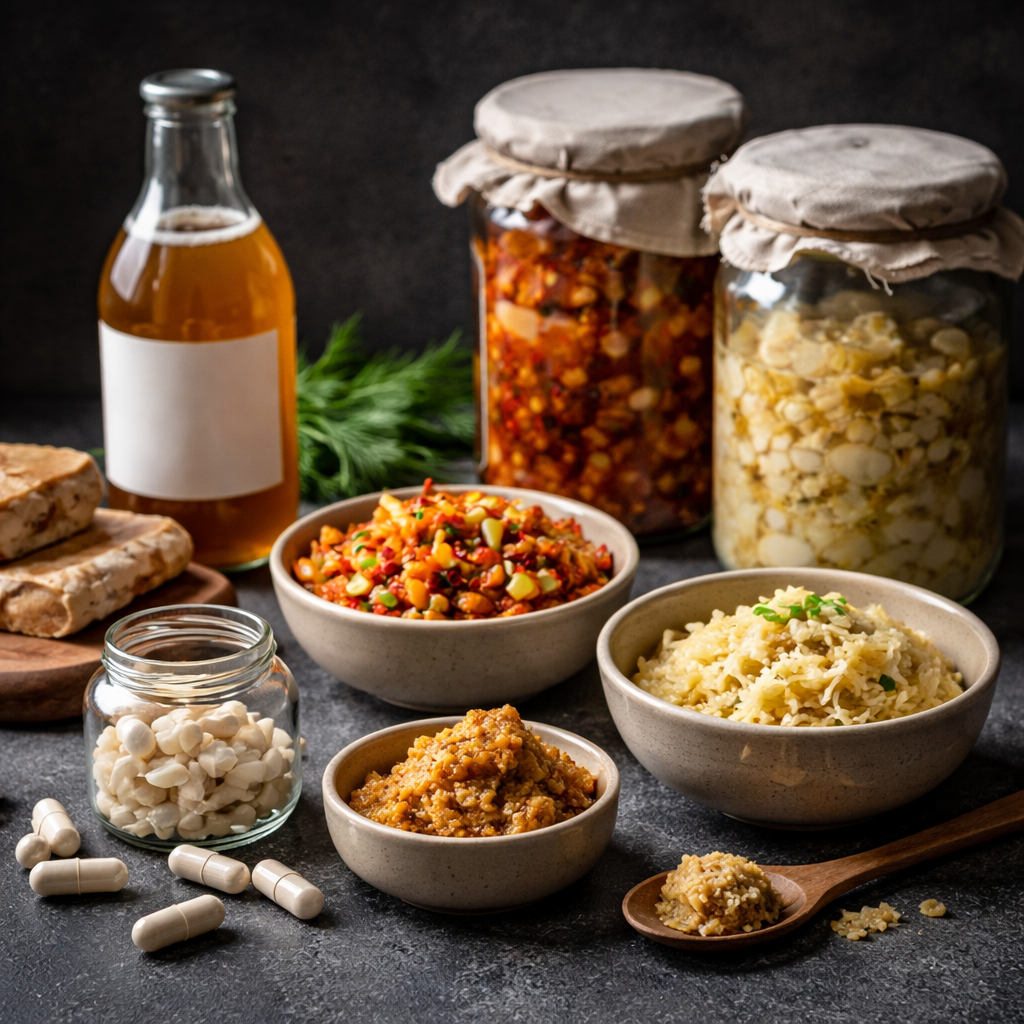
Probiotics themselves are vegan because they are microorganisms, not animal products. Some probiotic supplements are not vegan if they contain gelatine capsules, dairy-derived ingredients, or other animal-based additives.
Probiotics are often recommended for gut health, digestion, and microbiome balance. If you follow a vegan diet, it is reasonable to ask whether probiotic foods and supplements are actually vegan.
Understanding how probiotics are produced and what ingredients are used helps vegans choose options that align with their diet.
This post contains affiliate links. If you click through and buy something, I may earn a small commission at no extra cost to you.
What Are Probiotics?
Probiotics are live microorganisms that may provide health benefits when consumed in adequate amounts. Most probiotics are bacteria, although some supplements also contain beneficial yeast.
These microorganisms already exist in the human digestive system. The gut microbiome contains trillions of microbes that influence digestion, metabolism, and immune responses. When the microbiome is balanced, it helps support overall health.
Probiotic foods and supplements introduce additional beneficial bacteria into the gut environment. The idea is that these microbes can help support a healthy microbial balance.
How Probiotics Work In The Gut
The digestive tract contains a diverse ecosystem of microorganisms. Diet, stress, illness, medications and lifestyle habits can all influence this ecosystem.
Probiotics may support the microbiome by introducing beneficial bacteria that compete with harmful microbes and contribute to microbial diversity.
Research into probiotics is still developing. Some strains appear to help with digestive symptoms, antibiotic-related gut disruption, and certain gastrointestinal conditions. However, the effects vary depending on the specific bacterial strain and the individual taking it.
For an evidence-based overview of probiotics and their safety, see the
NHS guide to probiotics.
Are Probiotic Supplements Always Vegan?
Even though probiotic organisms themselves are microorganisms, probiotic supplements are not always vegan.
The final supplement may contain ingredients derived from animals or produced using animal-based materials. Vegans usually need to check both the capsule material and the ingredient list.
Ingredients Vegans Should Check
One of the most common non-vegan ingredients in supplements is gelatine. Gelatine capsules are made from animal collagen and are widely used in the supplement industry.
Vegan probiotic supplements usually use plant-based capsules made from materials such as hydroxypropyl methylcellulose (HPMC) or pullulan.
Other ingredients that may make a probiotic supplement unsuitable for vegans include lactose, whey, milk powder or honey. These ingredients sometimes appear as stabilisers or carriers in supplement formulas.
When choosing a probiotic supplement, reading the ingredient list carefully helps ensure it aligns with vegan dietary choices.
Probiotic Foods Vs Probiotic Supplements
Probiotics can come from both fermented foods and dietary supplements. Both provide beneficial bacteria, but they work slightly differently.
Fermented foods contain naturally occurring microorganisms created through fermentation. Supplements provide selected strains of bacteria in controlled doses.
Vegan Foods That Naturally Contain Probiotics
Many traditional fermented foods naturally contain probiotics.
Examples include sauerkraut, kimchi, miso, tempeh, kombucha and fermented vegetables. During fermentation, beneficial microbes break down sugars and starches in the food.
These foods introduce live bacteria while also providing fibre and nutrients that help nourish the microbiome.
However, not all fermented foods contain live bacteria. Some commercial products are pasteurised after fermentation, which can destroy probiotic cultures.
Types Of Probiotic Supplements
Probiotic supplements come in several formats including capsules, powders and gummies. Each format has different characteristics depending on the formulation.
Capsule Probiotics
Capsules are one of the most common ways probiotic supplements are delivered. Many probiotic capsules are designed to protect bacteria from stomach acid so that more of the organisms reach the intestines.
Capsule supplements often contain multiple strains of bacteria and higher colony-forming unit (CFU) counts.
Fermented Food-Based Probiotics
Some probiotic supplements are based on fermented foods and plant-based ingredients rather than isolated bacterial strains alone.
These formulas may include blends of fermented fruits, vegetables and beneficial bacteria designed to support digestive health and microbial balance.
Shop Together Health Multibiotic Here
Probiotic Gummies
Gummies provide an alternative option for people who prefer not to swallow capsules. Vegan gummies usually use pectin instead of gelatine as the gelling agent.
Some probiotic gummies combine beneficial bacteria with prebiotic fibres that help nourish gut microbes.
Shop Known Nutrition Pre + Pro Gut Support Gummies Here
Probiotics And Women’s Health
Certain probiotic strains have been studied in relation to women’s microbiome health. Lactobacillus species are commonly associated with maintaining microbial balance in the vaginal microbiome.
For this reason, some probiotic supplements designed for women include specific strains alongside vitamins and minerals that support general wellbeing.
Hormonal changes, antibiotics, stress and diet can all influence microbial balance. A balanced diet and healthy lifestyle remain important factors in supporting gut and microbiome health.
Shop Dr Vegan Women’s ProMulti Here
Probiotics And Men’s Health
Probiotics themselves are not gender-specific, but some supplements combine probiotic bacteria with nutrients commonly included in men’s health formulas.
These formulas may include vitamins, minerals and bacterial strains intended to support digestive health and general wellbeing.
Diet also plays a key role in maintaining a healthy microbiome. A diet rich in fibre, plant foods and fermented foods helps support beneficial bacteria in the gut.
Shop Dr Vegan Men’s ProMulti Here
Probiotics For Digestive Comfort
Some probiotic supplements are formulated to support digestive comfort and reduce occasional bloating.
These formulas may include bacterial strains and additional ingredients aimed at supporting the balance of microbes in the digestive tract.
Shop Known Nutrition Debloat Gummies Here
Kombucha-Based Probiotic Supplements
Some supplements combine probiotics with fermented ingredients such as kombucha powder and apple cider vinegar.
These ingredients are included in formulas designed to support gut health while incorporating fermented components commonly associated with probiotic foods.
Shop Known Nutrition Kombucha Gummies Here
Supporting Your Gut Health Naturally
While probiotic supplements can be helpful for some people, diet and lifestyle also play an important role in supporting the gut microbiome.
A varied plant-based diet rich in fibre helps feed beneficial gut bacteria. Fermented foods can introduce additional probiotic organisms, and a balanced diet helps maintain microbial diversity.
Understanding how probiotics work and how supplements are formulated helps vegans make informed choices about probiotic foods and supplements.
FAQs
Are probiotics considered vegan?
Probiotics themselves are microorganisms, so they are vegan. However, some probiotic supplements are not vegan if they contain gelatine capsules or dairy-derived ingredients.
What can vegans eat for probiotics?
Vegans can obtain probiotics from fermented foods such as sauerkraut, kimchi, miso, tempeh, kombucha and fermented vegetables.
What food is highest in probiotics?
Fermented foods often contain the highest levels of probiotics. Sauerkraut, kimchi, miso, tempeh and kombucha are common plant-based examples.
Why do some doctors warn against probiotics?
Doctors sometimes advise caution for people with compromised immune systems or serious illnesses because probiotics contain live microorganisms.
Do vegans need probiotic supplements?
Not necessarily. Many vegan diets already support gut health through fibre-rich plant foods and fermented foods. Supplements may be considered when fermented foods are not regularly included in the diet.
Leave a Reply