
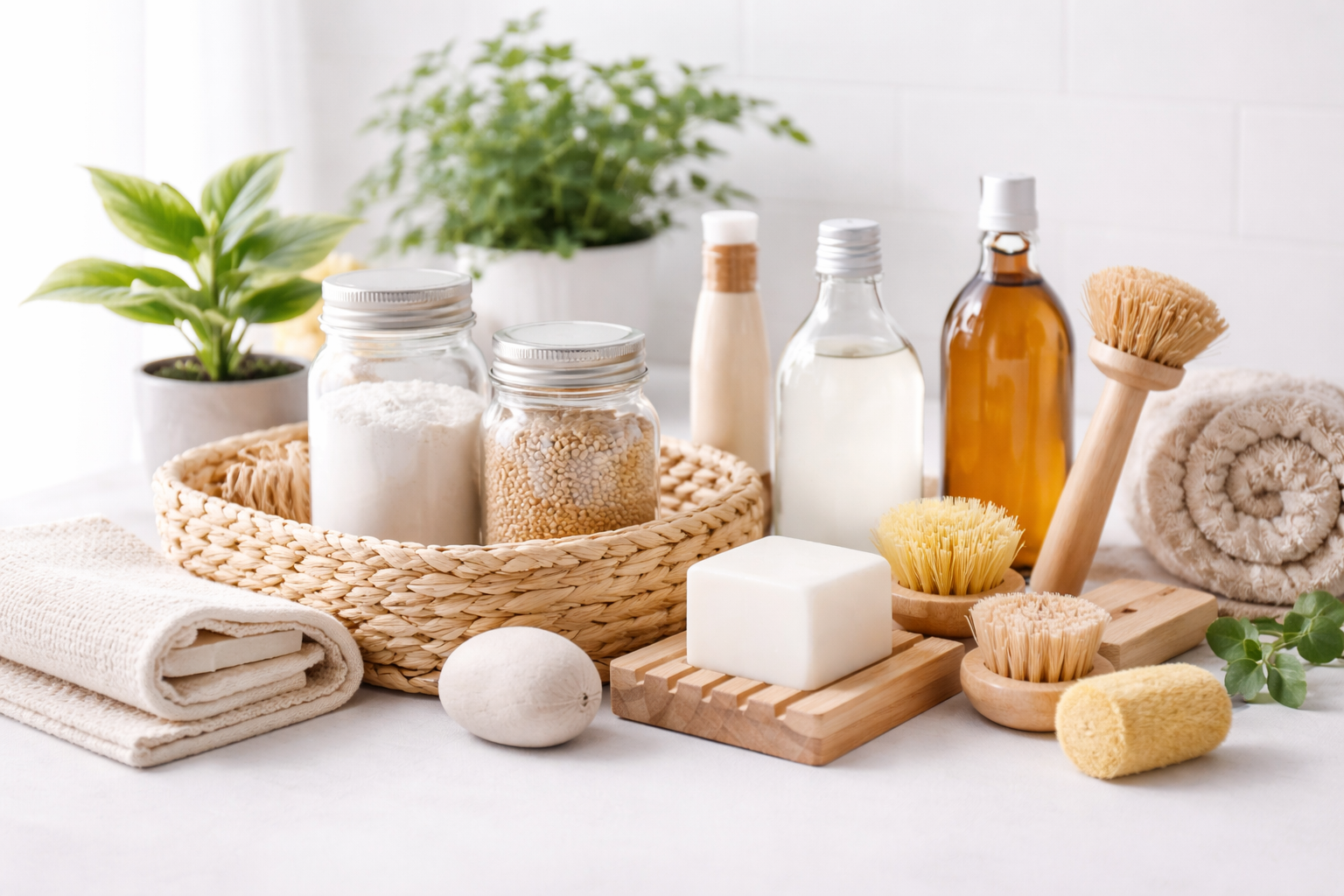
Creating an eco household does not require a full lifestyle overhaul. A handful of thoughtful, vegan swaps can make your home more eco friendly and reduce everyday waste without aiming for zero waste perfection.
An eco household is built through small, practical choices that fit real life. Many people want to reduce plastic, cut waste and make more sustainable decisions at home, but feel overwhelmed by conflicting advice or extreme approaches.
This guide focuses on simple, realistic swaps that support a more eco friendly household. The emphasis is on everyday items and habits you can change gradually, using options that are accessible in the UK and suitable for a vegan home.
This post contains affiliate links. If you click through and buy something, I may earn a small commission at no extra cost to you.
What an Eco Household Really Means
An eco household is less about how your home is built and more about how it operates day to day. It centres on reducing unnecessary waste, choosing lower-impact materials where possible, and using what you already have more thoughtfully.
The goal is progress, not perfection. A more eco friendly household is one where small changes add up over time, whether that is switching a regular product, reducing repeat purchases or cutting down on food waste.
WRAP provides practical guidance on reducing household waste and reusing everyday products.
Products Versus Habits
It is easy to assume an eco household means constantly buying new eco friendly products. In reality, habits matter just as much. Using less, reusing what you own and choosing longer-lasting items can often have a bigger impact than swapping everything at once.
When products are replaced, the most sustainable choice is usually one you will actually stick with. That might mean a refillable option, a plastic-free alternative or something designed to last for years rather than months.
Everyday Eco Household Swaps That Make a Difference
Some of the most effective eco household changes come from items you use every single day. These swaps are simple, low-effort and easy to maintain once they become part of your routine.
Bathroom and Toilet Basics
Toilet paper and soap are used in every household and are often packaged in plastic. Switching to recycled and bamboo toilet paper with no plastic packaging from Who Gives A Crap can reduce plastic waste while keeping a familiar product in your home.
Bar soap is another easy change that can make a real difference in an eco household. It helps cut down on plastic packaging and works just as well as liquid soap for everyday use. You might choose plastic-free vegan soap bars from KinKind for everyday personal care, which are designed to replace bottled products. If you prefer a men’s soap, solid, palm oil-free soap bars from Hiltwood Natural Soap are another option, while still helping to reduce unnecessary packaging.
Cleaning and Refills
Cleaning products are a common source of single-use plastic. Using refillable eco household cleaning products and plastic-free cleaning tools from re:gn allows you to reuse bottles and reduce how much packaging you throw away over time.
This approach suits an eco household because it focuses on reducing waste at source rather than constantly recycling. It also makes it easier to build a routine that feels manageable rather than restrictive.
Longer-Term Eco Household Choices
Beyond everyday consumables, longer-term decisions can significantly reduce waste across your home. These choices usually involve buying less often and being more selective about what you bring into your space.
Buying Less and Buying Better
Replacing frequently broken items creates unnecessary waste. Choosing long-lasting, buy-it-for-life household items designed to last from Buy Me Once supports an eco household by prioritising durability over convenience.
This does not mean everything must be expensive or perfect. It simply encourages buying fewer items that last longer, which reduces waste and often saves money over time.
Reducing Food Waste at Home
Food waste is a major issue in many households. Buying discounted surplus food that would otherwise go to waste through Nutricircle helps prevent good food from being thrown away while supporting a more resource-efficient food system.
For an eco household, this is about planning meals realistically, using what you buy and recognising that reducing waste is just as important as recycling.
Where to Start With an Eco Household
If you are new to creating an eco household, start with one or two changes that feel easy to maintain. Focus on items you already use regularly and avoid trying to change everything at once.
An eco friendly household grows gradually. Each small swap or habit change builds confidence and makes the next step easier, without turning sustainability into a source of stress.
FAQs
What Is an Eco Household?
An eco household is a home that aims to reduce its environmental impact through everyday choices. This includes reducing waste, using resources more efficiently and choosing lower-impact products where possible.
What Are Eco Household Products?
Eco household products are items designed to reduce environmental harm. This may include plastic-free alternatives, refillable products or items made to last longer than standard household goods.
What Are the Disadvantages of an Eco Household?
Some eco household products can cost more upfront, and not every option suits every lifestyle. It can also take time to find swaps that work well for your routine, which is why gradual changes are usually more sustainable.
What Makes a Household Eco Friendly?
A household becomes more eco friendly through consistent habits. Using less, wasting less, choosing durable items and avoiding unnecessary packaging all contribute to a lower-impact home.
Are Eco Household Cleaning Products Actually Better?
Eco household cleaning products can reduce plastic waste and harsh ingredients, but effectiveness varies. The best option is one that cleans well enough for your needs and is easy to use consistently.
How Can I Make My Household More Eco Friendly Without Going Zero Waste?
You do not need to aim for zero waste to improve your household’s impact. Focus on realistic changes, such as swapping everyday items, reducing food waste and buying less often, rather than trying to eliminate waste entirely.