
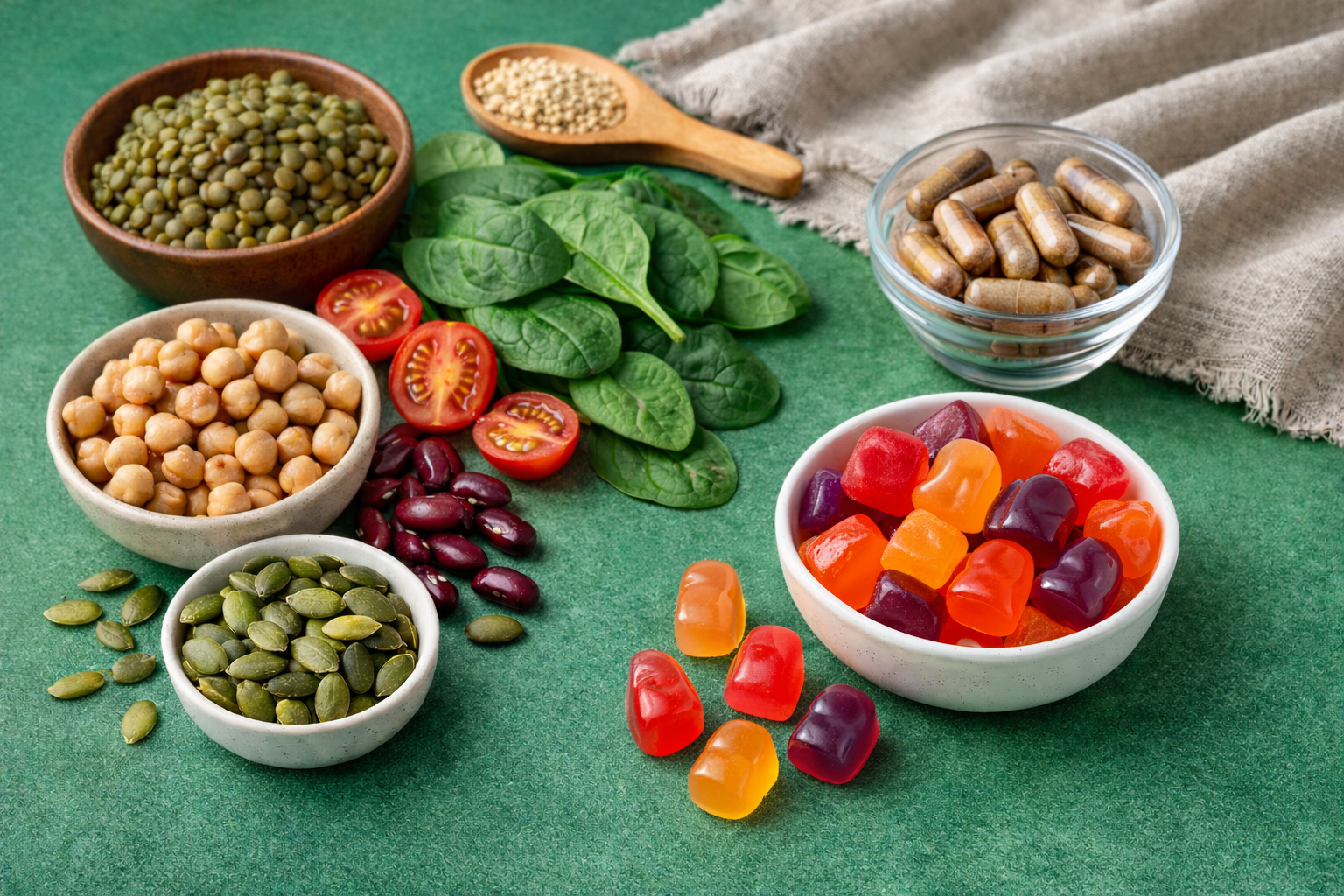
Vegan iron sources include legumes, tofu, seeds, wholegrains, fortified foods and iron supplements. Because plant-based iron is absorbed less efficiently, some vegans need supplements when food alone is not enough.
Eating a vegan diet does not automatically lead to low iron, but iron is one of the nutrients that requires more attention without animal products. Many vegans meet their needs through food, while others struggle despite eating well. The difference usually comes down to absorption, individual iron requirements and whether diet alone is enough to maintain healthy levels.
Understanding how vegan iron sources work makes it easier to decide when food is sufficient and when supplements are a sensible option.
This post contains affiliate links. If you click through and buy something, I may earn a small commission at no extra cost to you.
Vegan Iron Sources And Why They Matter
Iron is essential for making haemoglobin, which carries oxygen around the body. When iron intake or absorption is too low, symptoms such as fatigue, weakness, headaches and shortness of breath can develop over time.
All iron in a vegan diet is non-heme iron. This form is perfectly usable by the body, but it is absorbed less efficiently and is more affected by other foods and drinks. For this reason, vegans often need to think about both iron intake and iron absorption.
Plant Foods That Contain Iron
Good vegan iron sources include lentils, chickpeas, beans, tofu, tempeh, quinoa, oats, pumpkin seeds, cashews and dark green vegetables. Eating a variety of these foods regularly helps contribute to daily iron intake.
While these foods are nutritious, the amount of iron absorbed from them can vary widely. Someone with higher iron needs may struggle to meet requirements through food alone, even with a well-planned diet.
Fortified Foods As A Source Of Iron
Some breakfast cereals, breads and plant milks are fortified with iron. These products can make a meaningful contribution to iron intake, particularly for vegans who consume them consistently.
Fortified foods can be helpful, but they are not always reliable enough for people with low iron stores. The iron content and absorption differ between products, and labels need to be checked carefully.
Iron Absorption For Vegans
Iron absorption plays a major role in whether vegan iron sources are effective. Two people eating similar diets can absorb very different amounts of iron depending on what they eat and drink alongside it.
Improving absorption can sometimes make food-based iron sufficient. In other cases, absorption issues are a sign that supplements may be needed.
What Improves Iron Absorption
Vitamin C significantly improves the absorption of non-heme iron. Eating iron-rich foods alongside fruits or vegetables that contain vitamin C can help the body absorb more iron from meals.
Simple changes, such as adding peppers to meals or having fruit with food rather than tea or coffee, can improve iron uptake.
What Blocks Iron Absorption
Tea and coffee can reduce iron absorption when consumed with or close to meals. Calcium supplements and large amounts of calcium-rich foods may also interfere with iron uptake.
This does not mean these foods need to be avoided, but timing matters. Spacing iron-rich meals and supplements away from tea, coffee and calcium can make a noticeable difference.
When Food Is Not Enough
For some vegans, dietary iron sources and absorption strategies are not sufficient to maintain healthy iron levels. This is more common in people with higher iron needs, such as those who menstruate, during pregnancy, or with certain health conditions.
If symptoms of low iron persist or blood tests show low iron stores, supplements are often the most reliable way to increase intake.
Symptoms Of Iron Deficiency In Vegans
Common symptoms include ongoing fatigue, weakness, dizziness, pale skin, headaches and shortness of breath. These symptoms can overlap with other nutrient deficiencies, which is why proper testing is important.
NHS guidance explains how iron deficiency is diagnosed and managed NHS iron deficiency information.
Do Vegans Need Iron Supplements?
Some vegans do not need supplements at all, while others benefit from them either short term or long term. Supplements are not a failure of diet. They are simply another iron source, particularly useful when absorption from food is not enough.
Iron supplements should be used thoughtfully, as taking iron unnecessarily or at high doses can cause side effects.
Iron Supplements Suitable For Vegans
Iron supplements provide a concentrated and predictable source of iron. For vegans with low iron levels, they are often more effective than relying on food alone.
There are different types of iron supplements available, and the form and dose matter for both effectiveness and tolerance.
Gentle Iron And Absorption-Friendly Options
Gentle iron supplements usually use forms such as iron bisglycinate, which are often better tolerated and less likely to cause digestive upset. These can be a good option for people who struggle with standard iron tablets.
A vegan-friendly option is Together Health gentle iron capsules.
Iron Gummies And Lower-Dose Options
Iron gummies can be a useful option for vegans who struggle with tablets or capsules, or who are looking for a lower-dose, maintenance-style supplement rather than a higher-strength iron product. They are often easier to tolerate and may suit people with mild needs or those aiming to prevent deficiency rather than correct low iron stores.
Because gummies usually contain less iron per serving, they are not typically suitable for treating diagnosed iron deficiency. However, for people who cannot tolerate standard iron tablets or who want a more convenient format, vegan iron gummies can still play a role. An example of this type of product is Known Nutrition vegan iron gummies.
Multivitamins That Include Iron
Some vegan multivitamins include iron at lower doses. These can suit people who are trying to maintain iron levels rather than correct a deficiency.
Multivitamins with iron are generally not strong enough to raise low iron stores on their own, but they may be useful for ongoing maintenance.
Choosing The Right Iron Source For You
The best vegan iron source depends on individual needs, absorption and current iron levels. Some people manage well with food and fortified products, while others benefit from supplements.
If iron levels are low or symptoms persist, iron-only supplements are usually more effective than multivitamins. For milder needs, a multivitamin with iron may be enough.
If you are unsure, a blood test and professional advice can help guide the decision.
FAQs
What Vegan Foods Are High In Iron?
Vegan foods high in iron include lentils, beans, tofu, tempeh, quinoa, oats, seeds, nuts and dark green vegetables. Fortified cereals and breads can also contribute to iron intake.
What Are The Symptoms Of Iron Deficiency In Vegans?
Symptoms may include fatigue, weakness, dizziness, headaches, pale skin and shortness of breath. These symptoms should be assessed with proper testing.
What Blocks Iron Absorption?
Tea, coffee and calcium can reduce iron absorption if consumed with iron-rich meals or supplements. Spacing them apart can help improve absorption.
What Foods Raise Iron Quickly For Vegans, And When Are Supplements More Effective?
Iron-rich foods combined with vitamin C can help improve intake, but supplements are usually more effective when iron levels are already low or absorption from food is insufficient.
Does Vitamin B12 Increase Iron Levels?
Vitamin B12 does not increase iron levels. Iron and B12 are separate nutrients, and deficiencies should be assessed and treated individually NHS information on B12 deficiency.