
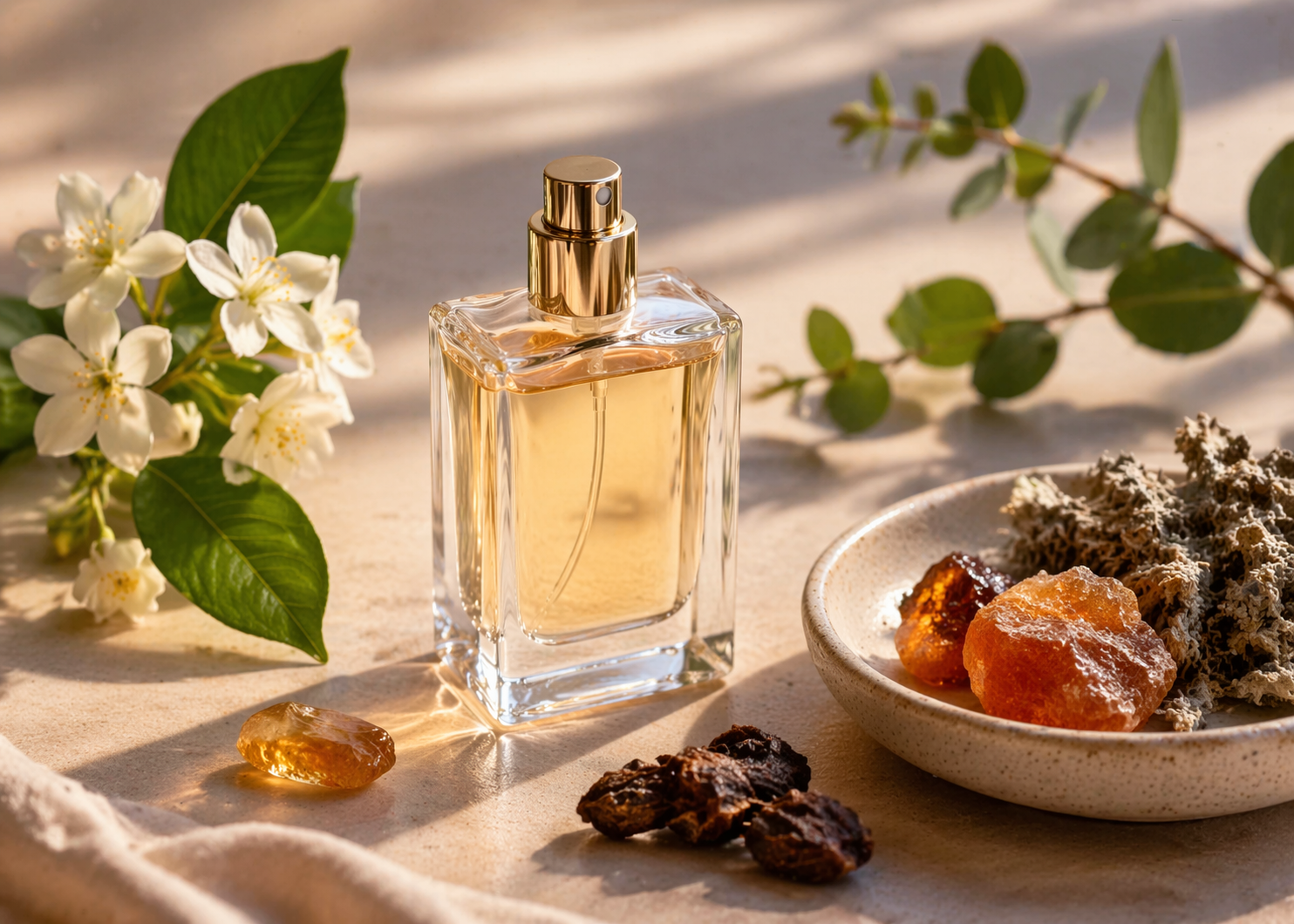
No, perfume is not always vegan. Some fragrances use or draw on animal-derived ingredients such as ambergris, civet, castoreum and musk, while others use synthetic alternatives instead.
Perfume is one of those products people often assume is vegan without thinking too much about it. It is not food, so there is less instinct to check ingredients closely, and many shoppers understandably take words like cruelty-free, clean or modern as a sign that a fragrance must also be vegan.
That is where the confusion starts. Perfume is not automatically vegan, and the answer is not always obvious from the bottle. Fragrance formulas are often protected, which means shoppers may only see a general term such as fragrance or parfum instead of a full ingredient breakdown.
This matters because perfume can create decision fatigue very quickly. You want to make a better choice, but the information is often incomplete. The good news is that you do not need to become an expert in perfumery to shop more confidently. Once you know what can make a fragrance non-vegan, why labels can be misleading, and what to look for before you buy, the whole category becomes much easier to navigate.
Is Perfume Vegan?
No, not by default. Some perfumes are vegan, but perfume as a category is not automatically vegan.
A product needs to contain no animal-derived ingredients or by-products to be considered vegan. That is important because a fragrance can be cruelty-free and still contain animal-derived ingredients. If you are specifically looking for vegan perfume, you need the ingredients side of the question answered as well.
Why The Answer Is Often Unclear
Perfume is much less transparent than categories such as food or supplements. If you see fragrance on a label, it can stand for a mix of many ingredients, and companies are not required to disclose every individual component.
That means you are often relying on brand transparency instead of a complete ingredient list. It also means you cannot safely assume that a perfume is vegan just because it sounds modern, synthetic, botanical or luxurious. If a brand does not clearly state that a fragrance is vegan, you may not have enough information to know for sure.
What Makes Some Perfumes Non-Vegan?
The main issue is animal-derived ingredients. Perfumery has historically used raw materials from plant, animal and synthetic sources, and some animal-derived materials were valued because they helped scent last longer.
This is why perfume keeps coming up in vegan conversations. Even if many modern fragrances now rely on synthetic substitutes, perfumery has a real history of using animal-derived materials, and that history still shapes the way fragrance is made, marketed and discussed today.
Animal-Derived Ingredients Used In Fragrance
Some of the best-known animal-derived ingredients associated with perfume include:
- Ambergris
- Civet
- Castoreum
- Musk
These ingredients have historically been used to add depth or help a scent last longer on the skin.
You do not need to memorise every traditional perfume ingredient. You just need to know that perfume is not automatically vegan, and brands do not always make that clear.
That does not mean every perfume contains animal-derived ingredients. Some do, some use synthetic alternatives, and many brands still do not give enough information to make the difference obvious.
Why Vegan Perfume Is Hard To Identify
The biggest challenge is not always the ingredient itself. It is the lack of clear, consistent labelling. A shopper might be willing to avoid animal-derived ingredients, but that only helps if the brand makes the information easy to find and easy to understand.
Recognised vegan certification exists because consumers need a trustworthy standard when ingredient claims are not obvious. That can be useful in fragrance, where labels are often vague and incomplete.
Why Cruelty-Free Is Not The Same As Vegan
This is one of the most common points of confusion. Cruelty-free refers to animal testing, while vegan refers to ingredients and production standards.
That is why cruelty-free on its own is not enough for a post like this. It can be a positive sign, but it does not answer the full question. If your reader wants vegan perfume specifically, they need to see either a direct vegan claim from the brand or a recognised vegan standard attached to the product.
How To Choose Vegan Perfume With Confidence
The good news is that you do not need perfect information to make better choices. In practice, this comes down to reducing guesswork and rewarding transparency.
Start with the clearest signal available. A direct vegan claim is more helpful than vague ethical wording. If there is no certification, look for specific language from the brand. A clear statement that a perfume is vegan is much more useful than broad terms such as clean, natural, premium or luxury. Those phrases may sound reassuring, but they do not answer the vegan question.
What To Check Before You Buy
Look for these things first:
- A clear vegan label or direct vegan claim
- Recognised certification, where available
- Brand transparency about ingredients or formulation standards
- Wording that goes beyond cruelty-free and addresses vegan status directly
Also pay attention to what is missing. If a brand talks at length about ethics, wellness or premium ingredients but never clearly says the perfume is vegan, that gap matters. In fragrance, missing information is often the whole problem.
This post contains affiliate links. If you click through and buy something, I may earn a small commission at no extra cost to you.
Where To Start
If you want to avoid checking ingredients and brand claims every time, it can be easier to start with a fragrance brand that clearly states its vegan status.
Atenai London is a UK-made, vegan-friendly, cruelty-free fragrance brand.
FAQs
Are Perfumes Usually Vegan?
No. Some perfumes are vegan, but perfume is not vegan by default, and fragrance labels are not always transparent enough to confirm ingredient sourcing without a clear brand claim or recognised certification.
What Makes A Perfume Non-Vegan?
A perfume is non-vegan if it contains animal-derived ingredients or by-products. Examples historically associated with perfumery include ambergris, castoreum, civet and musk.
What Perfumes Are Vegan?
Vegan perfumes are fragrances made without animal-derived ingredients or by-products. The safest options are products that are explicitly labelled vegan or supported by a recognised vegan standard.
How Can You Tell If A Perfume Is Vegan?
Look for a direct vegan claim, recognised vegan certification, or clear brand wording about ingredients and sourcing. Do not rely on cruelty-free wording alone.
Is Cruelty-Free Perfume The Same As Vegan Perfume?
No. Cruelty-free refers to animal testing, while vegan refers to ingredients and production standards. A perfume can be cruelty-free and still not be vegan.